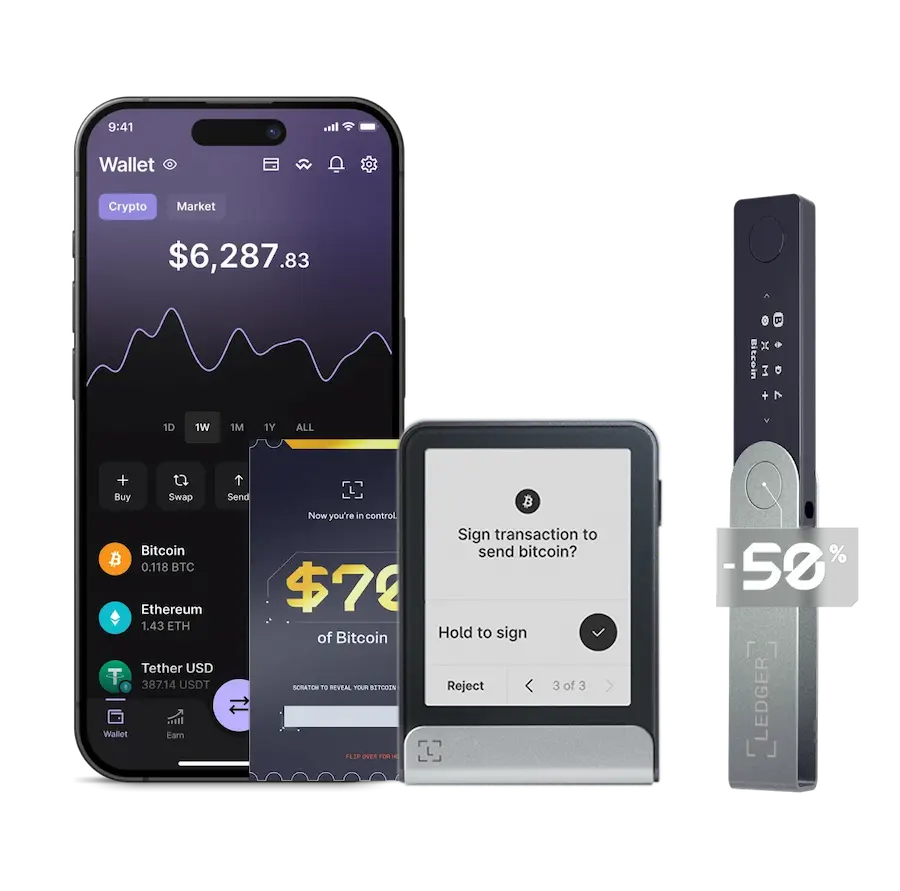


Key takeaway: The Ledger wallet secures crypto assets by isolating private keys offline within a certified Secure Element chip, making remote hacking impossible unlike connected solutions. This architecture guarantees total financial sovereignty and optimal protection for investors, provided the 24-word recovery phrase is kept strictly offline. It's the go-to tool for combining maximum security with seamless Web3 management via the Ledger Live app.
The fear of seeing your cryptocurrencies vanish instantly following a hack or exchange platform bankruptcy haunts every crypto investor concerned about their wealth. Facing this constant vulnerability, the Ledger wallet stands as the ultimate cold storage safeguard, erecting an impenetrable physical barrier to isolate your private keys from web threats. This analysis breaks down how this digital safe works and compares models to help you guarantee total financial sovereignty over your precious assets.
What exactly is a Ledger wallet?
Before dissecting the technology, you need to understand what we're dealing with. A Ledger wallet isn't what most people imagine, and this misconception costs many investors dearly.
The myth of the wallet containing your cryptos
Stop visualizing a purse filled with digital coins. In reality, your cryptocurrencies only exist on the blockchain and never leave this network. Your wallet stores just one thing: the private keys that allow you to access them.
That's where the hardware wallet comes in. It's a physical device, specialized and completely disconnected from the Internet. Its sole purpose is to protect those famous private keys from the threats swarming online.
Ledger has established itself as one of the undisputed leaders in this market. Think of this product as a personal digital safe for your blockchain assets. It secures access, but the money stays on the network.
We're touching on true financial sovereignty here. Owning a device like this means taking back total control of your funds. You no longer depend on a bank or exchange platform that could freeze your assets.
Cold storage vs. Hot storage
"Hot storage" refers to wallets constantly connected to the Internet. These are your mobile apps, browser extensions, or accounts on exchange platforms. They're ultra-convenient for buying coffee or making frequent transactions.
But this convenience comes at an exorbitant price: vulnerability. Since they're online, they represent a prime target for hackers, malware, and phishing attacks targeting your money.
"Cold storage" works the opposite way. It involves keeping private keys on a medium that's never exposed to the Internet. A Ledger wallet is the perfect example of this approach—we call it a "cold wallet" for total isolation.
Security is the absolute priority here, even if it means an extra step to validate transactions.
Here's what to remember to not get your strategy wrong:
Hot Wallet
- ✓Ideal for: Daily transactions and small amounts
- ✓Access: Quick and convenient
- ✗Security: Vulnerable to online attacks
- ✗Key control: Often held by third parties
Cold Wallet
- ✓Ideal for: Long-term storage and large amounts (HODL)
- ✓Security: Maximum, disconnected from Internet
- ✗Access: Less direct, requires physical device
- ✓Key control: Entirely in your hands
Inside the engine: how Ledger secures your cryptos
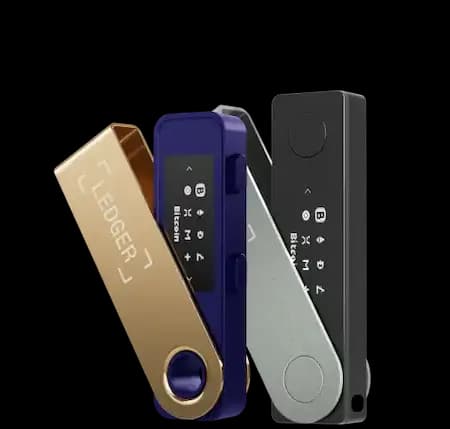
Now that we've laid the groundwork, let's see what's under the hood. Ledger's security promise doesn't rest on thin air, but on a very specific hardware architecture.
The Secure Element chip: the bunker for your keys
The cornerstone of a Ledger wallet's security is its Secure Element (SE) chip. You already use it daily without knowing. It's exactly the same cutting-edge technology that protects your biometric passports and bank cards.
Think of it as a miniature fortress. It's designed to resist the most vicious physical and software attacks, where other chips would fail. It's inside this electronic bunker that your private keys are generated and stored, completely safe.
Let me be very clear on this point: your private keys NEVER leave the Secure Element. All cryptographic operations, like signing a transaction, happen inside, in a sealed environment.
That's the whole difference with a standard USB drive or smartphone. These consumer devices don't have such an isolated environment, making storing private keys on them extremely risky, even suicidal for your funds.
Furthermore, Ledger is the only company in the sector using this type of EAL5+ certified chip. This is a level of guarantee you won't find with the competition.
The 24-word recovery phrase: your only safety net
Let's talk about your recovery phrase, often called "seed phrase." It's a unique sequence of 24 words that the Ledger device randomly generates during initial setup.
Its role is absolutely vital: it's the master backup of all your private keys. If tomorrow your Ledger device is lost, stolen, or destroyed, this phrase is the ONLY way to restore access to your funds on a new device.
The saying "not your keys, not your coins" takes full meaning here. Your 24-word phrase is the ultimate key to your digital safe.
I can't stress this enough: this phrase must be written on paper and kept in a safe place, away from prying eyes, water, and fire. Never store it online, whether as a photo, email, or in the cloud.
If someone gets their hands on this phrase, they have total and irreversible access to your cryptocurrencies. Even Ledger never knows it and can't help you.
The responsibility is immense, I'll grant you that. But it's the price to pay for total sovereignty over your assets, without depending on any bank.
Secure Your Crypto Today
Get up to $90 in BTC and save up to 50% on your Ledger hardware wallet. Limited time offer!
Get the DealLedger Live: your Web3 control center
Having a digital safe is great. But if it stays closed and inert, it's not much use. This is where Ledger Live comes in, the essential bridge between your cold fortress and the dynamic crypto universe.
A complete ecosystem, not just a wallet
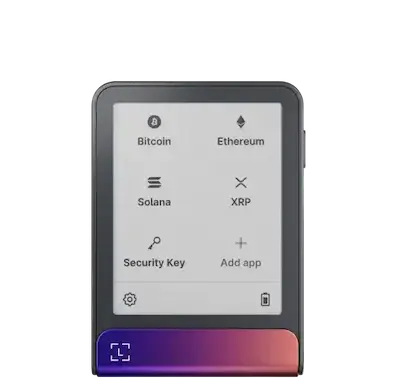
Forget the image of a simple passive control screen. Ledger Live is the essential companion app, available on your computer and mobile. It's not just a balance viewer, it's a true asset management platform designed for demanding investors.
It's through this interface that you actually interact with your device. The app prepares the ground and transactions, but the final validation, that critical digital signature, always happens physically on the device for maximum security.
The tool's strength lies in its massive compatibility. Ledger Live supports thousands of different tokens and blockchains, as well as your NFT collections. This versatility makes it a unique solution for centralizing your entire digital wealth.
Native integration of third-party services is also a game-changer. You can buy, sell, or exchange your cryptos without ever having to send your funds to a vulnerable external platform. This significantly strengthens your Ledger wallet's daily security.
Key features of Ledger Live
Ledger Live has become much more than a simple wallet; it's a sophisticated central hub. Its features go beyond simple viewing to offer active and secure management of your finances.
Here's what this control tower lets you actually do:
- Portfolio Management: View all your assets, cryptocurrencies and NFTs combined, from a single protected interface.
- Buy and Sell: Purchase cryptos directly by card or transfer via integrated partners like Coinify or Wyre.
- Swap: Exchange one cryptocurrency for another directly from your secure wallet, without going through a risky centralized exchange.
- Staking: Grow your holdings by participating in network security like Ethereum, Tezos, or Solana, directly from the app.
- dApp Connection: Interact securely with the DeFi ecosystem or NFT marketplaces.
A vital defense mechanism deserves your attention: "Clear Signing." This function lets you verify on the Ledger screen the exact details of what you're signing. It's crucial protection against devastating "blind signing" scams.
This feature makes interacting with smart contracts much less anxiety-inducing. You know exactly what you're committing to before pressing the button, avoiding signing a blank check to a malicious protocol.
Ledger lineup on the grill: Nano S Plus vs Nano X vs Stax
The ecosystem is clear, security too. But concretely, which device to choose? Ledger offers several models with very different characteristics and prices, and choosing the wrong model can quickly become frustrating in daily use.
Flagship model comparison
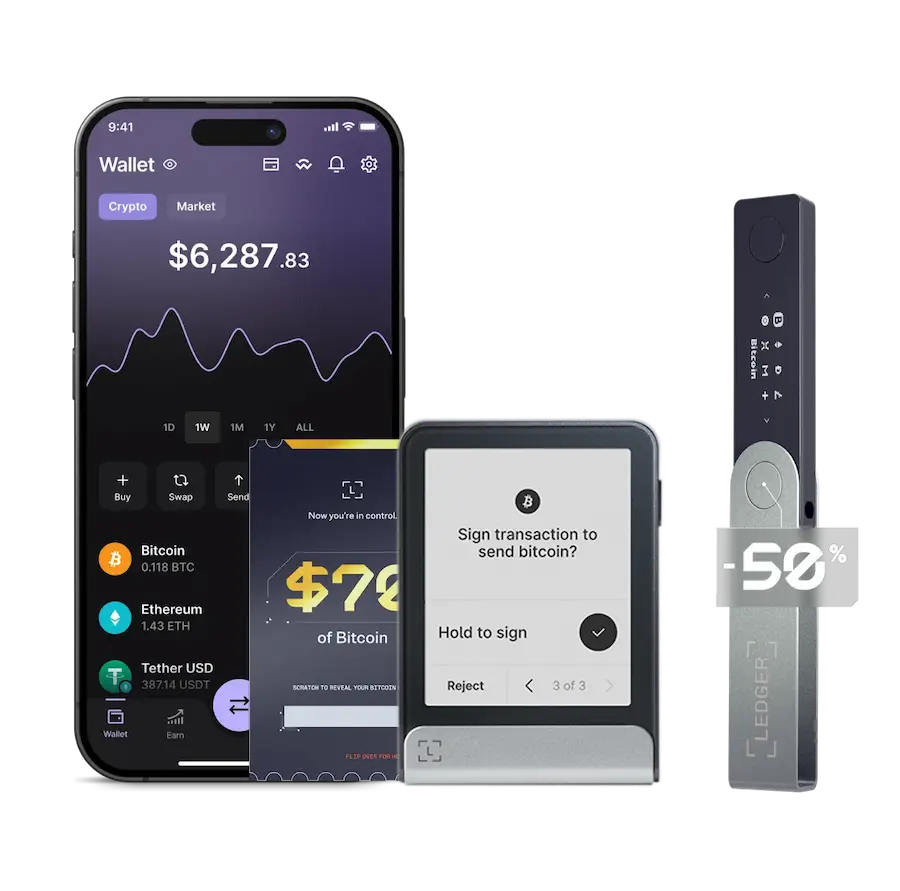
Ledger Nano S Plus, Nano X, Stax stand out as the reference. The Ledger Nano S Plus is the robust wired choice for tight budgets. The Ledger Nano X offers Bluetooth freedom for constraint-free mobile management. The Ledger Stax targets the premium segment with its large curved touchscreen.
Let's look at the facts. Your Ledger wallet choice shouldn't be random, as the price gap between entry-level and luxury model is significant. Here's the raw data to help you decide.
| Feature | Nano S Plus | Nano X | Stax |
|---|---|---|---|
| Price | $79 | $149 | $279 |
| Screen | 128x64 px | 128x64 px | E-Ink touchscreen |
| Bluetooth | No | Yes | Yes |
| Battery | No | Yes (8h) | Yes (10h) |
| Storage | 1.5 MB | 2 MB | 1.5 MB |
| Apps | ~100 | ~100 | ~100 |
| Best for | Desktop users | Mobile users | Premium experience |
Let's analyze this table coldly. The Nano S Plus is the sensible choice: at around $79, you get the same security (EAL6+ chip) as the $279 Stax. It's unbeatable. Its lack of battery is even an advantage for pure "cold storage": one less wearing part. If you only touch your cryptos once a year, why pay more?
But here's the catch: if you use DeFi or make transactions every week, the S Plus cable quickly becomes an unbearable ball and chain. That's where the Nano X justifies its $149. Bluetooth is life-changing for validating a transaction on your smartphone at a café. Be careful though—battery means charge management.
The Stax plays in another league. It's not just a wallet, it's a tech object. Its E Ink screen isn't a gimmick: it lets you clearly read what you're signing without squinting, drastically reducing the risk of human error (and thus fund loss). The several-month standby battery crushes the Nano X. It's expensive, yes, but for managing a large portfolio or NFT collection, the visual comfort and touchscreen security are worth the investment.
Ledger vs rivals: the match against Trezor and Tangem
Ledger isn't alone in the ring. Other players offer cold storage solutions with sometimes very different philosophies. A quick overview is in order.
Ledger vs. Trezor: the battle of philosophies
Trezor remains the most serious historical competitor to the Ledger wallet. These two giants don't really compete on raw features or price. The real divergence lies elsewhere, in their fundamental vision of security. It's a culture clash.
Trezor bets absolutely everything on open source transparency. Their software code and complete hardware design are public, accessible to everyone. This allows anyone to verify the total absence of backdoors. That's reassuring for many.
In return, they refuse to use a Secure Element, preferring a standard microcontroller. The main argument is that security through obscurity of the closed component is less robust. They bet on total transparency rather than trade secrets.
It's an endless technical debate within the crypto community. Ledger counters that its SE offers far superior physical protection against key extraction. Open source alone cannot guarantee this level of hardware protection.
The final choice depends on your own trust slider. Do you prefer the banking certification of a specialized component or collective verification by the community? You decide.
Ledger vs. Tangem: simplicity vs versatility
Tangem arrives as a more recent competitor with a radically different proposition. No more bulky little box with physical buttons. Here, we move to an ultra-thin credit card format. It's visually disorienting.
All functionality relies on contactless NFC technology. Just tap the card on your smartphone to validate a transaction via the app. No battery, no cable, and especially no control screen.
The major advantage remains extreme ease of use, capable of attracting absolute beginners. Security also relies on a certified chip, similar in principle to Ledger's. The entry barrier disappears.
The trade-off inevitably lies in available features. The ecosystem is much less developed than Ledger Live, especially for complex DeFi interactions. You'll be more limited.
Ledger offers greater versatility and better visual control thanks to its screen. It's an indispensable asset for serenely securing your advanced transactions. You keep control.
Past controversies: should you worry?
A perfect picture would be suspicious. Like any leading technology company, Ledger has had its share of turbulence. It's fair to address them head-on.
The 2020 data breach: a blow to trust
In June 2020, the fortress trembled, but not where expected. Hackers exploited a vulnerability to infiltrate the marketing and e-commerce database, without touching the core system. It was an attack on the commercial perimeter, not on the Ledger wallet technology itself.
Yet the hackers' bounty was still sensitive: names, emails, phone numbers, and postal addresses of nearly 270,000 customers were exposed. It's frightening for privacy, let's not kid ourselves. However, remember that no private keys or funds were compromised during this incident.
The real danger emerged afterward, in a vicious and persistent form. Victims suffered massive waves of phishing by email and SMS, sometimes terrifyingly sophisticated. Scammers used this real data to try to extract your 24 secret words.
This episode left a lasting scar on the brand's public image. Trust was shaken, even though the intrinsic security of the hardware never failed.
Ledger Recover: the feature that sparked outrage
May 2023 marks another turning point with the announcement of Ledger Recover, a paid and completely optional service. Its purpose was to offer a backup solution for the recovery phrase. The idea aimed to reassure those who panic at the thought of managing their security alone.
Ledger Recover is designed for users who fear losing their recovery phrase, offering them an alternative to self-custody responsibility.
Technically, the phrase is encrypted, fragmented into three distinct parts, and distributed to three different companies. This prevents any single entity from having complete access. To reassemble the puzzle and restore access, the user must go through strict and rigorous identity verification.
That's where it gets problematic for crypto purists. For this service to work, the firmware must technically be able to extract the recovery phrase from the secure chip. This broke an absolute dogma for many: the idea that "keys never leave the device."
Ledger hammered home that this extraction is impossible without explicit agreement physically validated on the device. But for part of the community, the mere technical possibility constituted a betrayal of the initial promise. Blind trust gave way to heightened vigilance.
So, is Ledger wallet right for you?
The verdict: a mastered compromise between security and usability
My opinion is that the Ledger wallet remains one of the most robust solutions on the market. The architecture based on a Secure Element offers a level of physical protection that few competitors match. It's this certified EAL hardware barrier that makes all the difference against attacks.
The Ledger Live ecosystem is undoubtedly its greatest asset. It transforms a simple safe into a true platform for Web3 interaction, without sacrificing basic security. You manage your assets and staking without ever exposing your keys.
The controversies revealed flaws, not in the product, but in communication and trust management. The company seems to have learned lessons, for example by making its code more transparent. Vigilance remains necessary, but the technical response is reassuring.
Choosing a Ledger means choosing a mature and versatile ecosystem, which requires accepting some "black box" (the Secure Element) in exchange for certified security. It's the price of peace of mind.
Who is a Ledger wallet really for?
A Ledger wallet isn't for everyone. Its usefulness really depends on your investor profile and your use of cryptocurrencies. No need to equip yourself if you only own a few dollars.
Here are the typical profiles that get the most out of this technology:
- Long-term investor (HODLer): If you buy cryptos to hold for years, a cold wallet is essential. The Nano S Plus is perfect for this, sleeping in a safe with no battery to manage.
- DeFi explorer: If you frequently interact with DeFi protocols, the Nano X (for Bluetooth) + Ledger Live with "clear signing" combo is a security guarantee. You see exactly what you're signing.
- NFT collector: The ability to view NFTs on Ledger Live, and spectacularly on the Stax, makes it a top choice for securing your collections.
- Exchange escapee: For anyone who understands the risk of leaving funds on an exchange (remember FTX) and wants control, a Ledger is a logical first step. Sovereignty regained.
However, for someone who only does micro-transactions or is starting with $50, a hot wallet may suffice. The complexity of cold storage isn't justified for such small amounts.
Switching to a hardware wallet like Ledger marks a maturity milestone in your crypto journey: where asset security becomes a non-negotiable priority. You finally become your own bank.
In sum, Ledger stands as an essential reference for securing your digital assets. Despite past controversies, its certified hardware architecture and comprehensive ecosystem offer an ideal balance between protection and accessibility. It's the preferred tool for taking total control of your crypto wealth and navigating Web3 with peace of mind.
Frequently Asked Questions
Ready to Secure Your Crypto?
Join over 6 million users who trust Ledger to protect their digital assets. Use our exclusive link and save 10% on your purchase.
Get Your Ledger Now